

3D modeling has become an integral part of industries like gaming, animation, architecture, and product design. With the rise of artificial intelligence, creating detailed and realistic 3D models has never been easier. AI-driven tools like Meshy AI, Rodin AI, and DeepAI are transforming how professionals and enthusiasts approach 3D design by automating complex processes and delivering high-quality results in record time.
In this article, we will compare the most prominent AI 3D model generator tools available in 2025. Each tool will be evaluated based on its unique features, performance, and ease of use, so you can choose the one that best fits your needs. We’ll highlight key benefits, provide insights into their applications, and discuss why they stand out in this fast-evolving field. Whether you're a seasoned designer or new to AI 3D modeling, this guide will help you make an informed decision.
Key Factors in Choosing an AI 3D Model Generator
When selecting an AI 3D model generator, it’s important to evaluate several critical factors to ensure it meets your specific requirements. Below, we’ll explore these aspects in detail to help you choose the right tool for your needs.
1. Accuracy and Quality
A good AI 3D model generator should produce detailed, realistic, and optimized models that align with user needs. Look for tools capable of handling complex geometries with precision in textures and dimensions, ensuring visually appealing and functional outputs.
2. Ease of Use
The tool should be accessible to all skill levels with user-friendly interfaces, simple workflows, and helpful features like tutorials or templates. Beginners benefit from easy onboarding, while advanced users appreciate options for customization and scripting.
3. Speed and Performance
Fast rendering and optimization are crucial for meeting deadlines and boosting productivity. Efficient tools minimize waiting times without compromising quality, supporting large-scale projects and seamless handling of big datasets.
4. Cost-Effectiveness
Choose tools with transparent, flexible pricing—whether pay-per-use, subscriptions, or one-time purchases. Licensing options like commercial or academic plans ensure cost-effectiveness based on your specific needs and usage frequency.
5. Integration
Seamless integration with design software like CAD programs and standard file formats enhances workflows. Tools offering APIs or plug-ins ensure compatibility, making the generator a valuable part of your creative process..
Overview of Top AI 3D Model Generators
AI-powered 3D model generators are transforming the design industry by automating complex modeling tasks and offering a wide range of creative possibilities. Below is an overview of some of the top AI-driven 3D model generators, showcasing their unique features and benefits:
1. Meshy AI
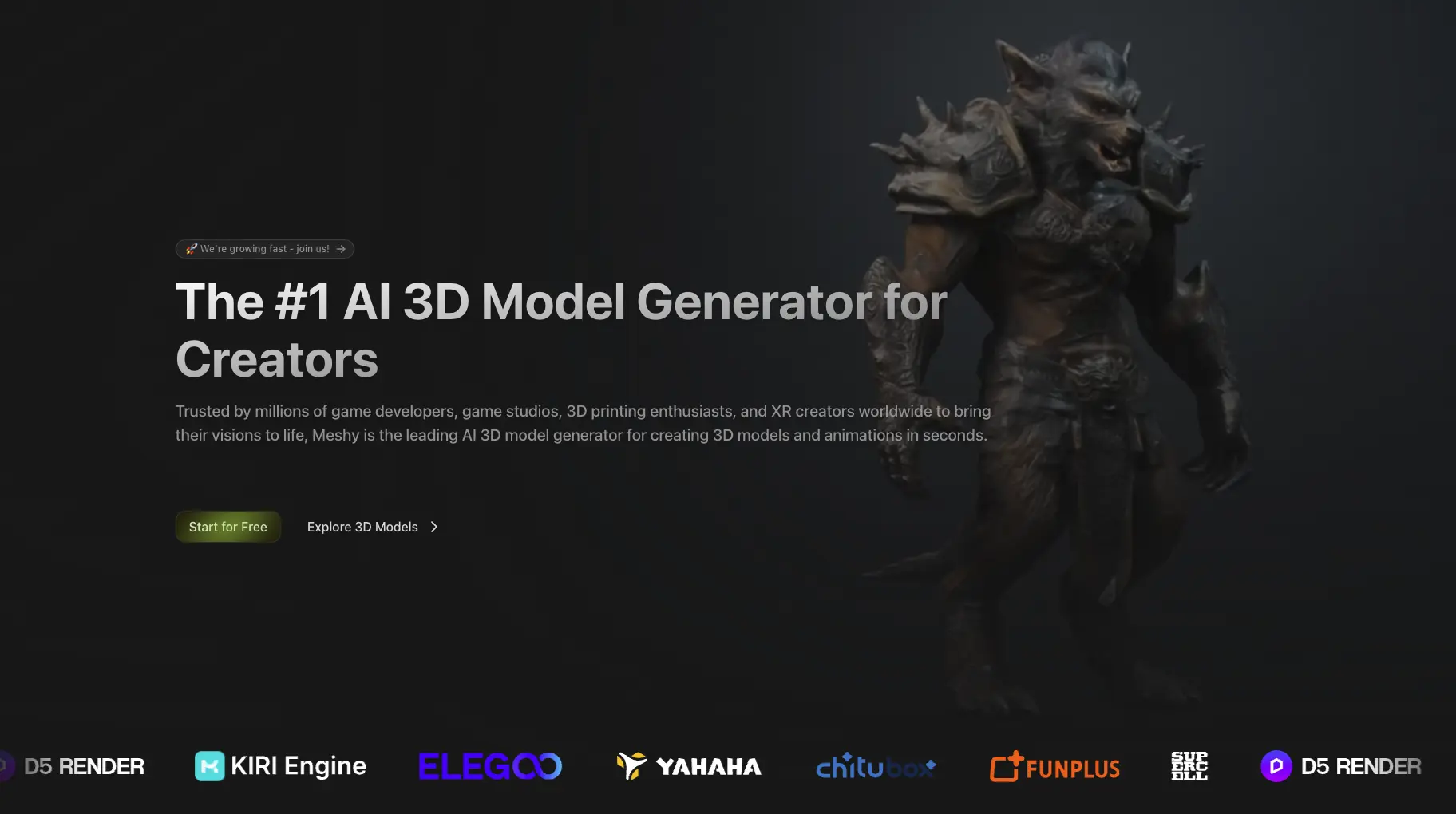
Meshy AI is a robust 3D model generator designed for creating high-quality assets efficiently. It uses advanced algorithms to create detailed models while maintaining clean meshes for reliable workflows. Meshy AI supports a variety of file formats, ensuring compatibility across different platforms.
Its intuitive interface is tailored to both beginners and professionals, making it user-friendly. Additionally, Meshy AI’s powerful optimization tools enable users to generate lightweight models without sacrificing details, ideal for real-time applications like gaming, VR, and AR.
2. Rodin AI
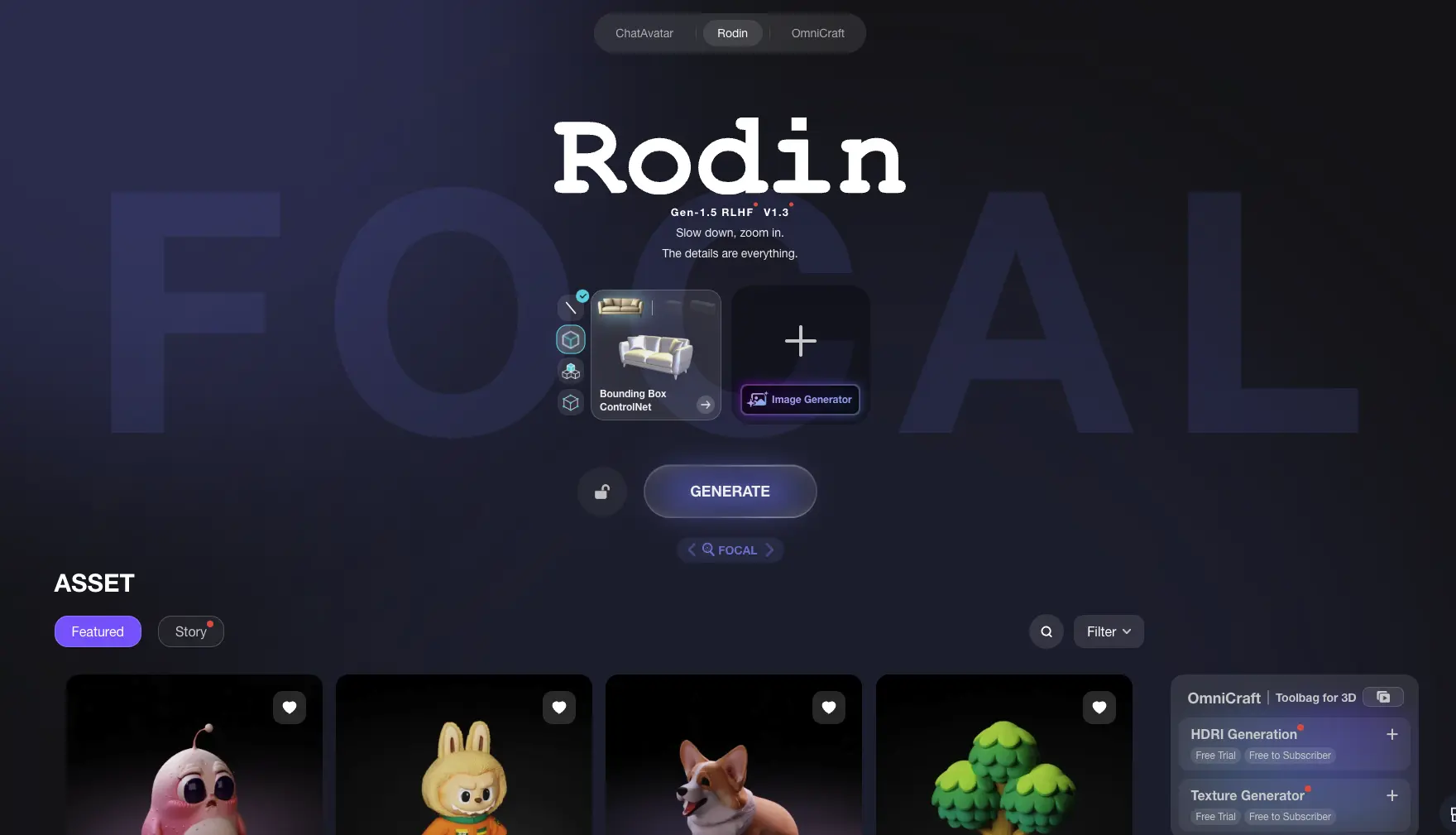
Rodin AI is an innovative solution that focuses on sculpting lifelike models with ease. Leveraging artificial intelligence, it simplifies complex modeling processes by offering curated presets and automated design tools. The platform specializes in generating organic and human-like forms, making it a go-to choice for character designers.
Rodin AI also features a highly responsive sculpting engine to refine details manually. With seamless integration into leading 3D software, Rodin AI ensures efficient collaboration and workflow enhancement for artists and designers.
3. DeepAI
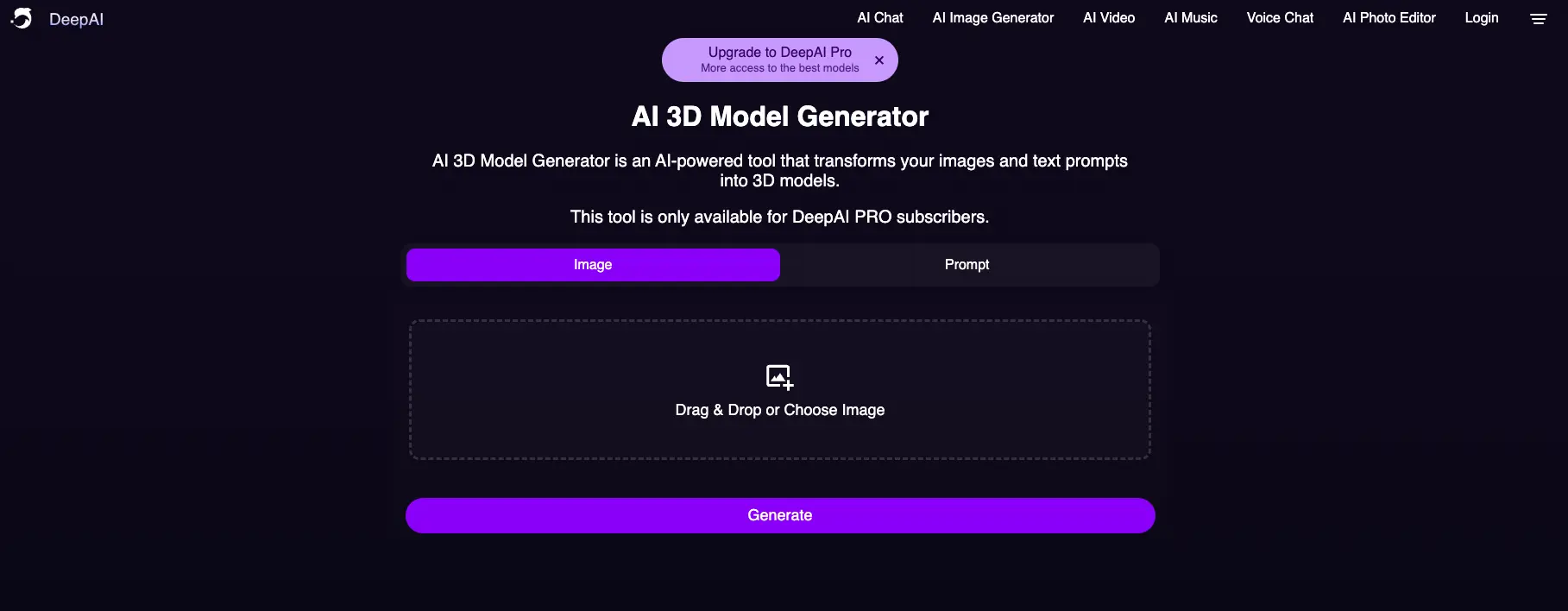
DeepAI delivers groundbreaking tools for 3D modeling with its focus on artificial intelligence-driven creativity. This platform excels in generating intricate shapes and textures using AI-powered algorithms that adjust based on user inputs.
DeepAI is particularly effective in crafting abstract designs, architectural forms, and procedural patterns. Its accessibility is further enhanced by cloud-based functionality, allowing users to work remotely without requiring high-end hardware. DeepAI’s continuous updates and community-driven improvements make it a reliable and forward-thinking platform for modern creators.
4. Luma AI
Luma AI is known for its photorealistic 3D models and efficient workflows. Combining machine learning and photogrammetry, it enables users to convert images and videos into detailed 3D assets effortlessly. Luma AI supports high-resolution outputs, making it ideal for industries like film production and marketing. Its tools also include environment reconstruction and texture generation, offering a comprehensive solution for digital content creation. With a focus on usability, Luma AI empowers professionals and hobbyists alike to bring their ideas to life.
5. Sloyd AI
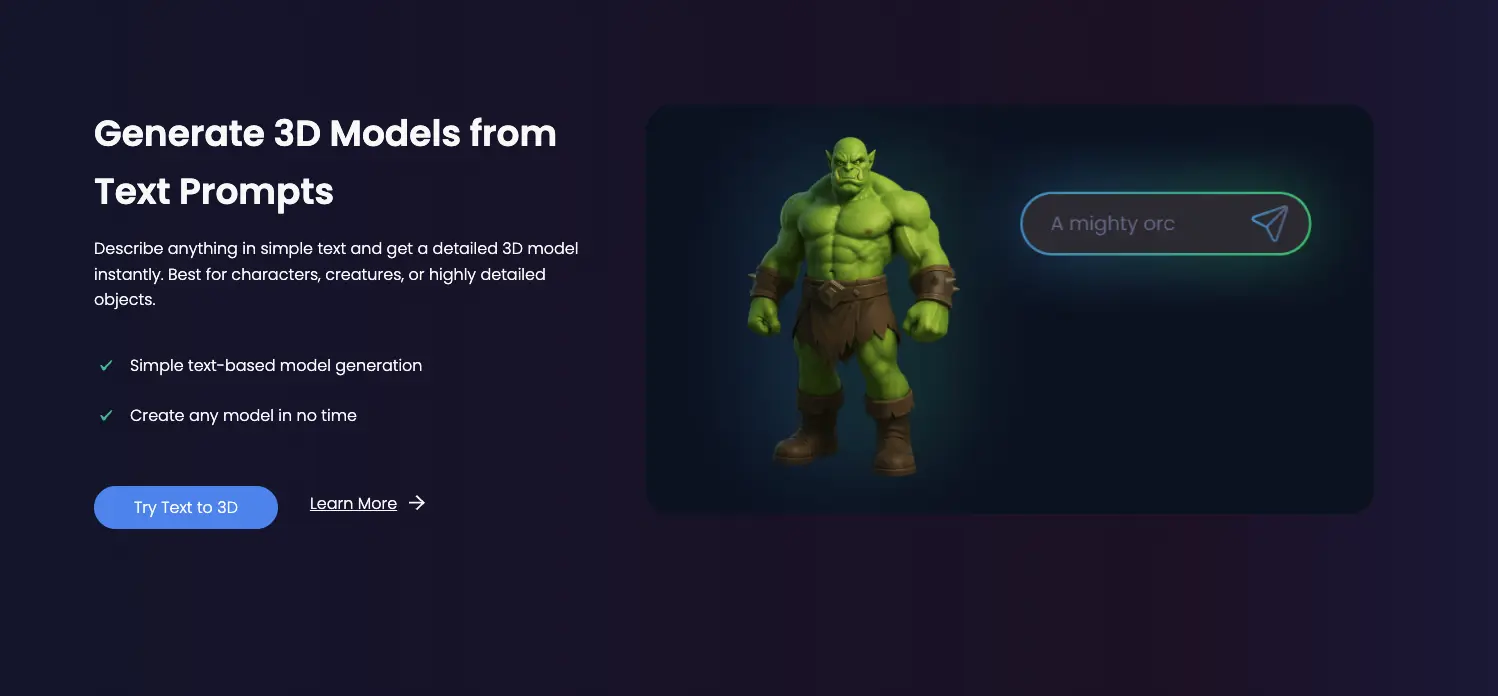
Sloyd AI stands out for its flexibility and modular approach to 3D modeling. It allows users to generate parametric models that can be customized with slider-based controls. This feature makes Sloyd AI particularly popular for game development and prototyping. The platform also provides procedural asset generation, enabling users to create reusable model templates.
Sloyd AI’s lightweight executable and cloud integration make it accessible across devices. Its focus on time-saving and versatility ensures that users enjoy an efficient and adaptive modeling experience.
Comparative Analysis
When comparing Sloyd AI with other 3D modeling tools, several key differentiators emerge. Its emphasis on procedural generation and ease of use sets it apart in the industry. Furthermore, cloud integration and lightweight deployment make it uniquely versatile for various workflows.
- User-Friendly Interface: Sloyd AI offers intuitive controls like sliders for customization.
- Procedural Generation: Enables quick creation of versatile, reusable templates.
- Cross-Device Accessibility: Cloud integration allows seamless access on multiple platforms.
- Time Efficiency: Focused on reducing modeling time, ideal for fast-paced projects.
FAQ
Is there an AI 3D model generator?
Yes, there are AI-powered 3D model generators like Sloyd AI that allow users to generate 3D models efficiently. These tools leverage machine learning algorithms and procedural generation techniques to create customizable 3D assets for various applications.
Can AI generate 3D models?
Absolutely. AI is increasingly being used to generate 3D models by analyzing patterns and adapting to user inputs. These advanced tools can automate time-consuming aspects of modeling while offering flexibility in design, saving significant effort for creators.
Can you use AI to generate 3D models?
Yes, AI can be used effectively for 3D model generation. By utilizing specialized platforms or tools, users can design models for gaming, animation, virtual reality, and other industries. AI simplifies the creative process by providing templates or auto-generating detailed structures.
How to use AI to generate 3D models?
Using AI to generate 3D models typically involves choosing an AI-based modeling software, setting or adjusting preferences (like shapes, textures, and styles), and allowing the tool to create the 3D model. The generated models can often be exported to other software for further refinement or integration into projects.
What are the benefits of using AI for 3D modeling?
AI-powered 3D modeling tools offer speed, accessibility, and cost-effectiveness. They can streamline workflows, eliminate repetitive tasks, and make 3D creation accessible to individuals without traditional 3D modeling expertise.
Can I use Sloyd AI to create 3D models from a text prompt?
Yes, Sloyd AI allows users to create 3D models by utilizing advanced 3D AI technology. With intuitive tools and procedural generation, you can generate and customize 3D models efficiently, even starting with a simple text prompt as the foundation for your creation.
Are AI-generated 3D models high quality?
Yes, many AI tools produce high-quality 3D models, especially when tailored to specific needs. However, the quality may depend on the tool being used, the parameters set, and the complexity of the desired model. For advanced detailing, models might still require manual refinement.
Final Thoughts
AI-powered 3D model generators are revolutionizing the creative process in 2025. These advanced tools simplify complex modeling tasks, making it easier than ever to create high-quality 3D content. Whether your focus is on realism, speed, customization, or user-friendly design, there’s an AI solution perfectly suited to your needs. As technology advances, incorporating AI into your workflow not only enhances efficiency but also unlocks unprecedented opportunities for creativity and innovation across industries like gaming, animation, architecture, and more.