Midjourney Aspect Ratio: Parameters, Sizes and Practical Examples
Updated 2026-10-19
Add --ar 16:9 to the end of a Midjourney prompt for a wide image, or --ar 9:16 for a tall one. The first number is width and the second is height. Without a different setting, the default is 1:1. Midjourney’s aspect-ratio reference.
Set the ratio on the web or in Discord
On midjourney.com, append the parameter in the Imagine bar or choose a default in its settings panel. In Discord, add the same parameter to the end of your prompt. Use whole numbers, not decimals: --ar 85:110 represents the proportions of an 8.5 × 11 page. Official parameter instructions.
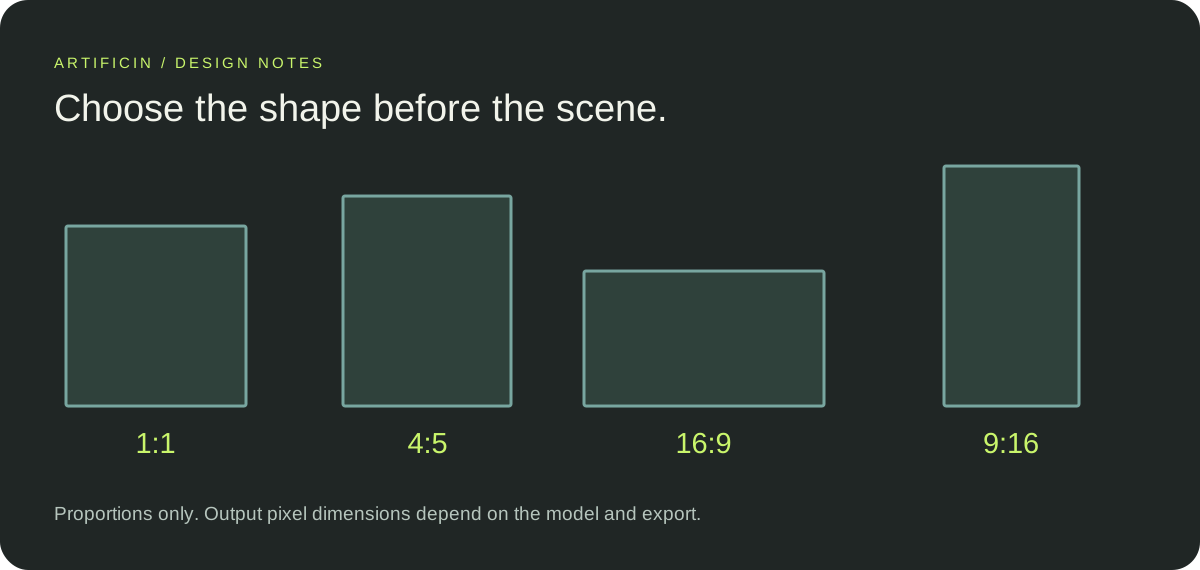
Choose the composition before you generate
| Ratio | Suggested layout | Composition check |
|---|---|---|
| 1:1 | Square product tile | Leave enough room around the object for a square crop. |
| 4:5 | Portrait card or printed layout | Keep the main subject clear of text and trim areas. |
| 16:9 | Wide presentation illustration | Reserve space on one side if a heading will be added. |
| 9:16 | Tall mobile composition | Keep essential details away from interface overlays. |
These are layout suggestions, not universal platform upload specifications. Check the destination’s current requirements before exporting. The diagram shows proportions only; it is not generated Midjourney output.
A reusable example
ceramic coffee cup on a linen table, side lighting, space on the left for a headline --ar 16:9
This is an illustrative prompt, not a tested result. For a fair experiment, keep the subject and other settings the same while changing only the ratio. Compare where the subject lands and whether the reserved space remains useful. A taller canvas may need a different composition brief, not just a different number.
Ratio is not resolution
Both 1600 × 900 and 3200 × 1800 have a 16:9 ratio. The parameter controls shape; the model and upscaling choices determine pixel dimensions. Very extreme ratios can behave unpredictably, and upscaling can slightly change proportions. Ratio and size notes.
The earlier version of this article described V4c as the default. That advice is obsolete. Model defaults and supported limits change; use Midjourney’s current version table for the model you actually select instead of applying the old V3–V5 limits.
Change an existing image’s shape
The web Editor can change the canvas shape using preset aspect ratios or manual adjustments. Reposition or scale the image within the canvas, then generate the newly exposed areas if needed. Inspect joins and subject continuity after the edit. Midjourney Editor documentation.
Cropping removes part of an image, while extending the canvas creates room outside it. Choose between them based on what must stay visible. Before delivering, open the downloaded file and check its actual dimensions, crop and placement in the final layout.
Editorial note: Checked on 19 October 2026 against Midjourney’s documentation. The original publication date is retained. The examples and proportion diagram are Artificin explanations, not a claim of hands-on model testing.